

Learn · Taroselia
Look first: how to read the picture on a card
Learn to separate what you can see, what you associate with it, and what you might infer.
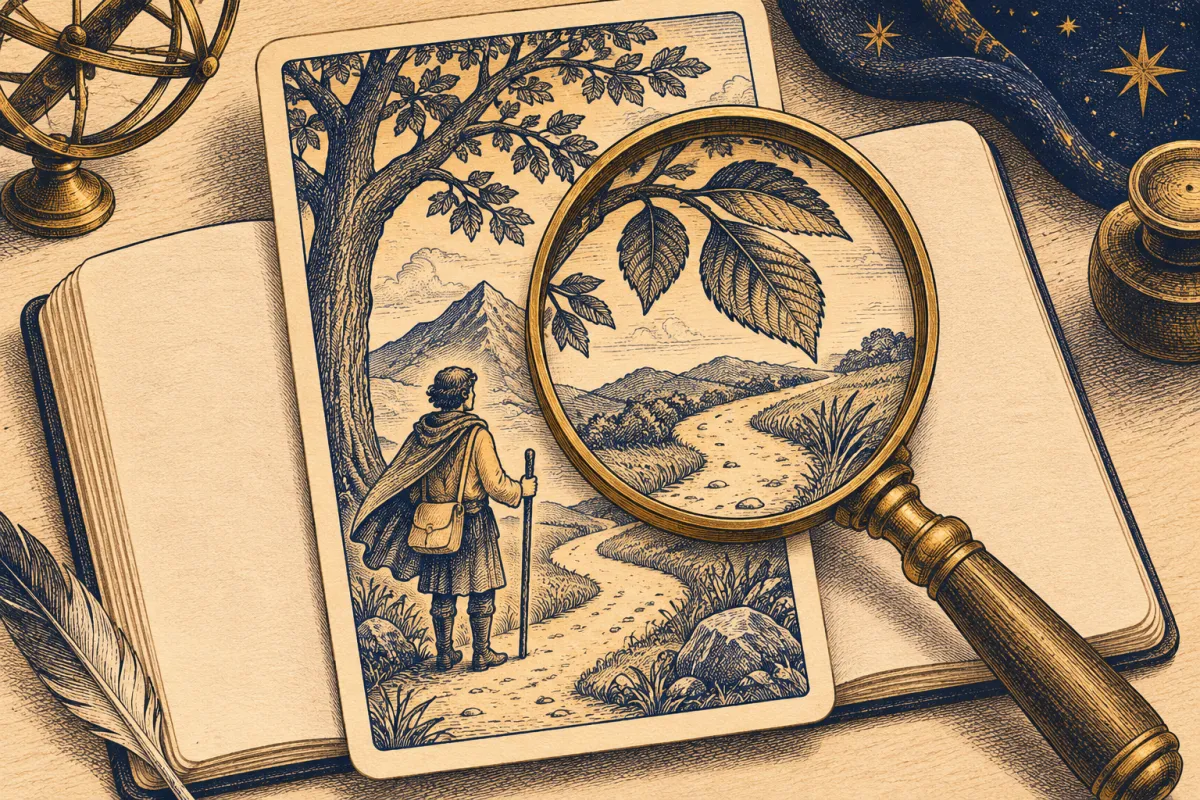
Describe before you interpret
Look at a card as you would look at a painting. Who or what occupies the foreground? Which direction are figures facing? Notice posture, distance, objects, weather and the relationship between background and foreground. Write concrete observations before adding a story.
For example, “a figure is carrying several objects” is an observation. “This person is overwhelmed” is an interpretation. The distinction matters: the same picture might suggest effort, responsibility, ambition or a temporary inconvenience in different contexts.
Let associations remain flexible
A color or animal does not carry one universal message. Your associations, the deck’s visual language and the reading’s question all shape the connection you make. A guidebook supplies a vocabulary; it should not erase what is actually in the image.
Compare a personal association with the published meaning rather than forcing them to match. If you see a conflict, record it. Learning to explain why you see a theme is more useful than collecting increasingly elaborate symbol lists.
Return the picture to the question
Ask which detail helps you notice something about the situation. A closed gate could become a prompt about access, boundaries or a pause. It does not prove that a particular person will exclude you or that an opportunity will disappear.
Keep at least two interpretations available until you compare them with evidence. If neither fits, leave the card unresolved. You are allowed to say that an image does not connect with your circumstances today.
Tarot is for reflection, not a promise of prediction.