

Learn · Taroselia
The Major Arcana: big themes without a fixed destiny
Approach the Major Arcana as a vocabulary for transitions, values and patterns rather than inevitable events.
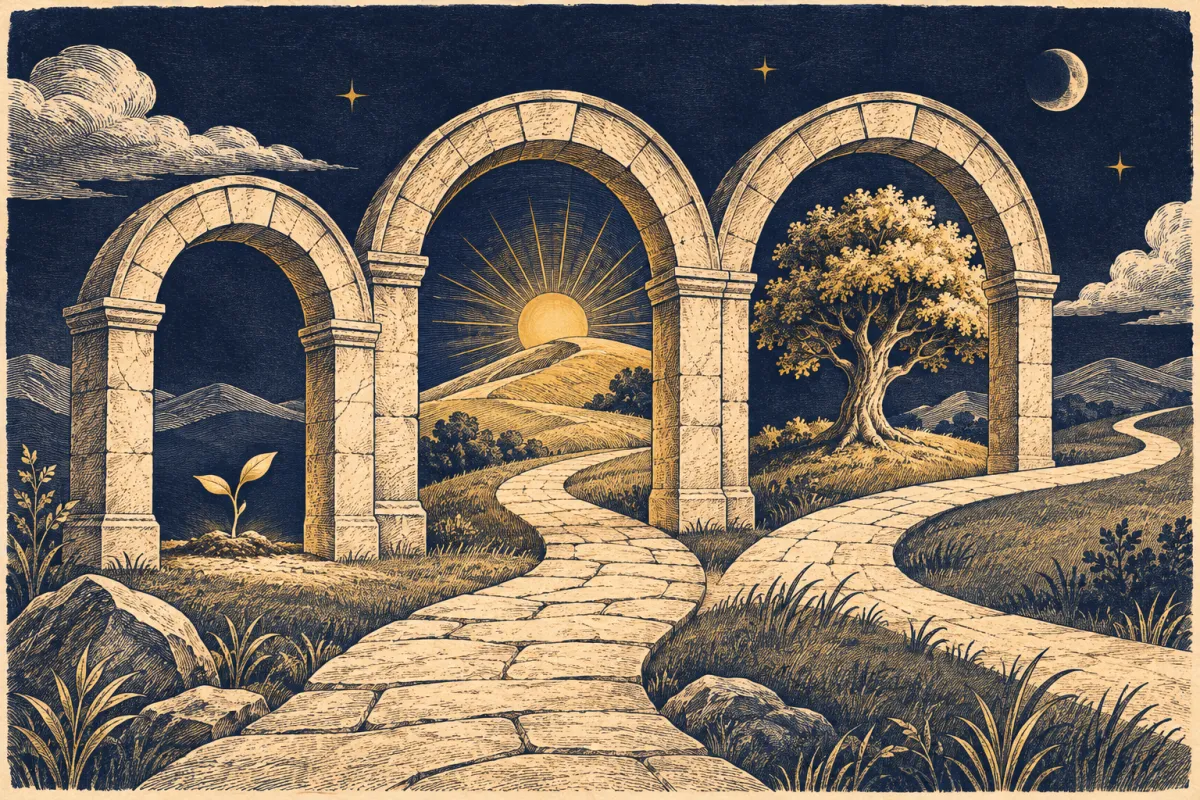
Use scale, not certainty
The Major Arcana offers recognizable themes such as beginnings, structure, solitude, change and completion. In a reflective reading, these can help name a broad pattern behind an everyday question. A major card is not evidence that a situation is more important than you thought.
The Fool, for example, can open questions about curiosity and preparedness. Those questions are useful whether you are starting a hobby or changing a routine. There is no requirement to turn every major card into a dramatic life event.
Treat a sequence as a learning aid
Some readers connect the Major Arcana into a journey. That is one way to remember contrasts and recurring ideas, not a rule that your life must pass through each card in order. You can compare nearby cards or cards with opposing themes without assigning yourself a permanent stage.
Notice how agency changes between images. Where does a figure act, wait, teach, travel or withdraw? These visual differences can generate better prompts than deciding whether a card is universally positive or negative.
Make difficult imagery specific
Cards such as Death, the Devil or the Tower can be unsettling. Their appearance does not establish a literal death, a diagnosis, a disaster or another person’s intentions. Pause if the imagery raises anxiety and translate the theme into an ordinary, bounded question.
Instead of “What terrible thing is coming?”, try “Which assumption deserves a second look?” or “What support would help me manage change?” If a reading is increasing distress, stopping is a valid and useful choice.
Tarot is for reflection, not a promise of prediction.